FBI Raids America’s 3rd Largest Trucking Company, 89 Drivers Arrested With $1.9B
We believe at least two of these drug dealers were playing Russian roulette with people’s lives, pushing pills that were disguised as the prescription painkiller oxycodone when in actuality the pills were fentinyl.
I don’t think we’re going to necessarily ask for a declaration of war.
I think we’re just going to people that are bringing drugs into our country.
Okay, we’re going to kill them.
Tons of drugs have been seized as a result of this task force.
We tried to put this in perspective for you.
This would be filling four 18wheelers.
Four all the drugs just in the last month that have been taken off the streets.
58,000 kilos of cocaine.
Think about a big backyard swimming pool.
That would fill one and a half swimming pools.
Just the powder cocaine that has been removed saving lives this last month.
Thanks to all of these people around the table, 2,300 kilos of fentanyl powder and 2.
1 million fentanyl pills off the streets and as the president said, more than a thousand illegal guns.
April 8th, 2025, Interstate 40, somewhere between Oklahoma City and Little Rock.
Arkansas State Police pulled over a semi-truck for a routine DOT inspection.
The driver seemed nervous.
The paperwork checked out.
Transnational Freight Services, America’s third largest trucking company.
But when DOT inspectors use density scanners on the trailer, they found something impossible.
The machinery parts weighed 400 lb less than the manifest claimed.
Inside hidden compartments built into the trailer walls, 340 kg of pure cocaine worth $12 million on the street.
The driver, a transnational employee for 6 years with a clean record, immediately cooperated.
What he told investigators triggered the largest corporate corruption case in FB1 history.
Transnational Freight Services wasn’t just compromised by a few bad drivers.
The entire company was a cartel front operation.
The Sinaloa cartel had purchased it two years earlier through Shell Corporations, transforming America’s third largest trucking company into the most sophisticated drug distribution network law enforcement had ever encountered.
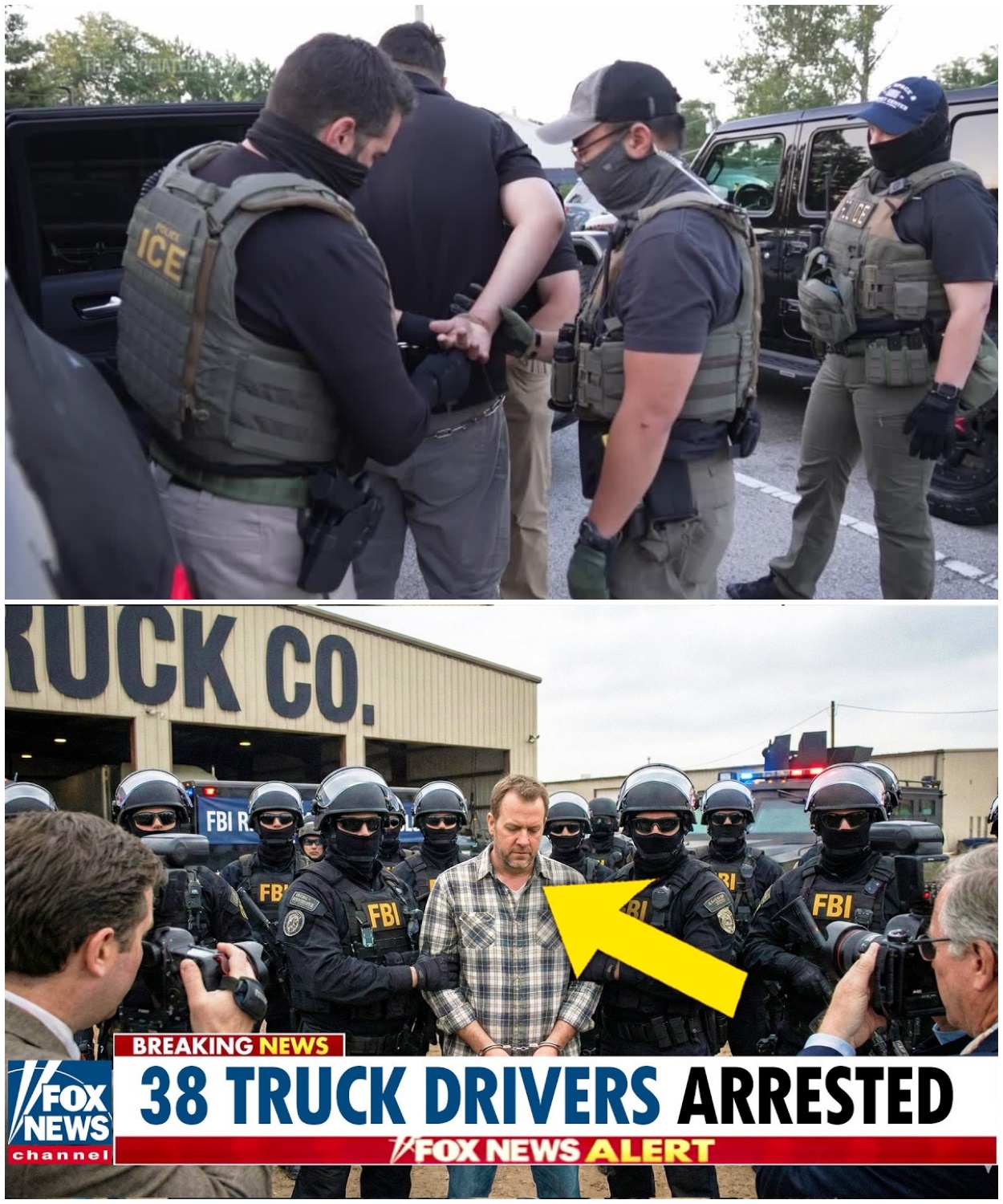
Over the next 3 weeks, FBI would discover that 89 of Transnational’s 400 drivers were knowingly hauling drugs, that the company’s 23 warehouses across 14 states were distribution hubs processing tons of narcotics monthly.
that legitimate freight and drug shipments were mixed together, making detection nearly impossible.
And that over 5 years, this operation had moved 2.
4 billion worth of drugs across America’s highways, hidden in plain sight among millions of legitimate deliveries.
How did the FBI take down a $3 billion trucking empire that had become the cartel’s highway to America? Hit like, comment, and subscribe before we reveal the interstate takedown that arrested 89 drivers in one day.
Major corporations trusted Transnational to move everything from automotive parts to consumer electronics.
The company employed over 8,000 people, maintained impeccable safety ratings, and had never faced serious legal scrutiny.
But in 2022, something changed.
The founding family sold the company for $850 million to an investment group called American Logistics Partners LLC.
The sale made business news as a successful exit for the founders.
Company operations continued normally.
Trucks kept rolling.
Customers noticed no difference.
What nobody knew, American Logistics Partners was a shell corporation controlled by the Sinaloa cartel.
The $850 million came from drug proceeds laundered through Mexican businesses, Chinese underground banks, and cryptocurrency exchanges.
Within 18 months, Transnational had been weaponized into the most sophisticated drug distribution network in America.
The operation worked like this.
Drugs crossed the Mexican border, hidden in commercial shipments or smuggled through cartel controlled corridors.
They arrived at Transnationals El Paso warehouse, which the cartel now controlled.
Warehouse workers, 32 of them on cartel payroll, received the drugs and loaded them into specially modified trailers alongside legitimate freight.
These trailers were then assigned to the 89 corrupted drivers who would transport them to distribution hubs across the country.
The destinations were transnational warehouses in Atlanta, Chicago, Philadelphia, Phoenix, Houston, Dallas, Charlotte, Memphis, and 11 other cities.
At each warehouse, cartel operatives working as warehouse staff would extract the drugs and distribute them to local dealers.
The trucks would then reload with legitimate freight and continue their routes, maintaining the appearance of normal commercial operations.
Over 5 years, this network moved 180 tons of cocaine, 45 tons of methamphetamine, and 8 tons of fentinyl across American highways.
The investigation that would destroy Transnational began with that single Arkansas traffic stop in April 2025.
When the driver agreed to cooperate, he provided FBI with devastating information.
He wasn’t the only transnational driver hauling drugs.
There were dozens of others.
The company’s warehouses were distribution centers.
FBI worked entirely outside the company, using federal resources to build a case without alerting anyone inside Transnational.
FBI subpoenaed Transnationals shipping records going back 3 years.
Analysts identified patterns.
Certain trucks repeatedly made runs to the same warehouses, often with cargo manifests that didn’t match the stated goods.
Specific drivers were assigned these suspicious routes repeatedly.
Warehouse deliveries occurred at odd hours when legitimate operations would be closed.
Financial investigators traced American logistics partners LLC through layers of shell corporations.
FBI installed GPS trackers on trucks driven by suspected corrupt drivers.
Surveillance teams followed them to destinations where instead of delivering to legitimate customers, drivers met with individuals later identified as cartel distributors.
Undercover agents posing as truckers applied for jobs at Transnational and were eventually approached with offers to make extra money on special runs.
DEA contributed intelligence from ongoing cartel investigations.
Wire taps on known Sinaloa operatives revealed references to the freight company and the trucks.
Cartel communications discussed shipment schedules that matched Transnationals delivery routes.
The evidence mounted.
Transnational freight services wasn’t compromised.
It was controlled.
By June 2025, FBI had identified 89 drivers who were knowingly transporting drugs.
They documented 23 warehouses functioning as distribution hubs.
They traced the corporate ownership to cartel shell companies.
And they had evidence showing $2.
4 billion in drug proceeds flowing through this operation over 5 years.
The challenge now, how do you arrest 89 drivers simultaneously across multiple states without warning others? How do you raid 23 warehouses at once? And how do you shut down a $3 billion trucking company without disrupting legitimate commerce and destroying the livelihoods of 7,000 plus innocent employees? July 15th, 2025, 5:00 a.
m.
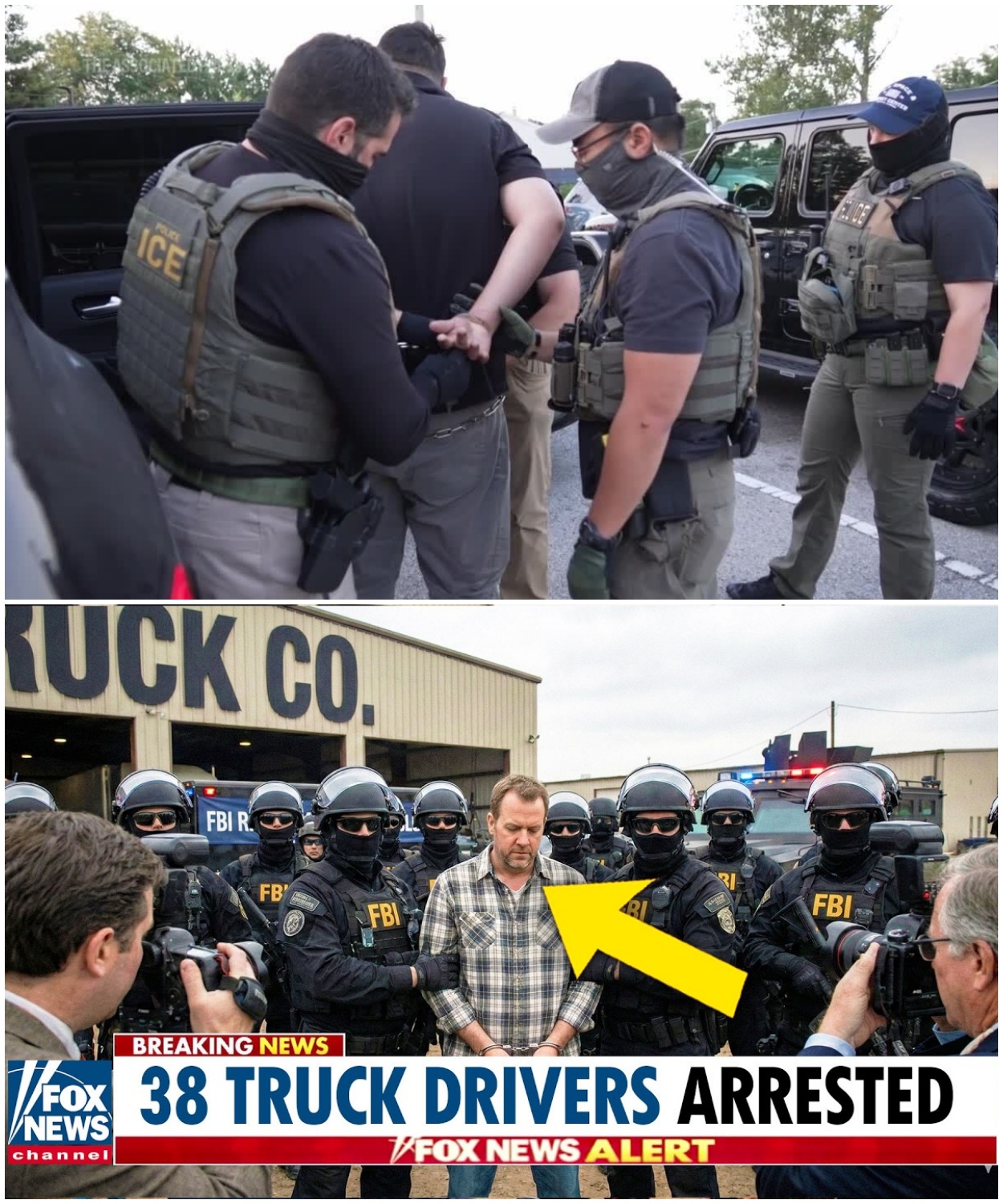
Eastern time, FBI tactical teams, DEA agents, and state police coordinated the largest simultaneous arrest operation in commercial transportation history.
Operation Rolling Thunder would execute across 18 states simultaneously.
FBI had spent two weeks tracking the locations of all 89 corrupt drivers.
Some were at home, others were mid- route at truck stops.
17 were at transnational warehouses loading or unloading cargo.
GPS trackers gave realtime positions on every target.
At exactly 5:03 a.
m.
, federal agents moved simultaneously.
In Texas, FBI pulled over three transnational trucks on I 10 and arrested drivers with 600 kg of cocaine in hidden compartments.
In Georgia, agents raided a truck stop and arrested four drivers who were coordinating their routes.
In Illinois, tactical teams breached a transnational warehouse where agents found 12 employees processing two tons of methamphetamine concealed among automotive parts.
At Transnationals corporate headquarters in Memphis, FBI executed a search warrant and seized all company records.
Management was shocked.
The legitimate executives running daily operations had no idea the company had been purchased by cartels.
Only a handful of cartel operatives in key positions knew the truth.
Across America, similar scenes played out.
Drivers were arrested at rest stops, in driveways, at loading docks.
Warehouse raids uncovered hidden drug processing rooms behind false walls.
Mechanics who’d built hidden compartments were taken into custody.
Dispatch coordinators who’d assigned drug runs were arrested at their desks.
By 2 p.
m.
, all 89 drivers were in federal custody.
23 warehouses were secured.
12 company executives and warehouse managers with direct knowledge of the operation were arrested.
and FBI had seized company records documenting 5 years of criminal activity.
The drug seizures were massive.
18 tons of cocaine found in trucks and warehouses, 4 tons of methamphetamine, 680 kg of fentinil, and $67 million in cash.
Investigators discovered the hidden compartment designs were sophisticated, built into trailer walls, fuel tanks, and cargo spaces with hydraulic mechanisms that made detection nearly impossible during normal inspections.
July 16th, 2025, Attorney General Pamela Bondi held a press conference in Washington DC alongside FBI Director Christopher Ray, DEA Administrator Anne Mgram, and Department of Transportation Secretary Shawn Duffy.
Yesterday, federal law enforcement dismantled the largest commercial drug trafficking network in American history.
The Sinaloa cartel didn’t just infiltrate a trucking company, they purchased one.
For 5 years, transnational freight services moved billions of dollars in drugs across our highways while maintaining the appearance of legitimate commerce.
89 drivers knowingly transported drugs.
23 warehouses served as distribution centers.
And American roads became cartel highways.
The charges were comprehensive.
All 89 drivers faced federal conspiracy to distribute narcotics, interstate drug trafficking, and money laundering charges carrying 15 to 40 years in prison.
12 company insiders with direct knowledge faced additional charges of running a continuing criminal enterprise with potential life sentences.
An FBI was pursuing seizure of the entire company under federal asset forfeite laws.
The evidence was overwhelming.
GPS data tracked drug deliveries.
Hidden compartments were photographed and documented.
Seized records showed payment structures for corrupt drivers.
Financial analysis proved cartel ownership.
Faced with this evidence, 76 drivers accepted plea agreements within 2 months, receiving sentences ranging from 15 to 28 years.
13 drivers went to trial.
All were convicted.
Transnational freight services filed for bankruptcy within days.
The company’s legitimate assets, trucks, warehouses, customer contracts were sold to competitors.
The $850 million the cartel paid was forfeited to the federal government.
Over 7,000 innocent employees lost their jobs, though many were hired by competing companies that absorbed Transnationals customer base.
The investigation revealed how deep the cartel’s corporate infiltration had gone.
They’d used legitimate business structures, American banking, and legal commerce to build a drug network that operated for 5 years without detection.
The strategy was so effective that cartels in Mexico immediately began seeking other companies to purchase.
Congress held hearings on corporate ownership transparency.
New legislation required enhanced vetting of major corporate acquisitions, particularly in transportation industries.
DOT implemented random deep inspections of commercial trucks using advanced scanning technology and FBI created a corporate infiltration task force dedicated to identifying legitimate businesses purchased or controlled by criminal organizations.
President Trump addressed Operation Rolling Thunder during a speech on combating drug trafficking.
The cartels thought they could buy an American company and turn our highways into their drug routes.
They were wrong.
We shut it down.
We arrested everyone involved.
And we sent a message.
American commerce is not for sale to criminals.
As of November 2025, the impact is clear.
Interstate drug trafficking via commercial trucks has dropped 41% as cartels lost their most reliable distribution method.
Enhanced DOT inspections have seized 12 additional drug shipments in commercial vehicles.
And the fear that legitimate businesses could be cartel fronts has prompted increased scrutiny of major corporate acquisitions.
The transnational freight services building in Memphis, once headquarters to a 3 billion operation, sits empty, a monument to ambition corrupted by greed.
The thousands of trucks that once bore the company logo have been repainted and redistributed to legitimate carriers.
And the 89 drivers who chose to betray their profession will spend decades in federal prison.
Their lives destroyed by decisions that seemed profitable but proved catastrophic.
If you believe these stories of justice must be told, then like this video, subscribe to America Truth, and share this with someone who needs to understand that cartels will infiltrate any business, any industry to move drugs.
But federal law enforcement will find them, dismantle them, and bring everyone involved to justice.
Because American highways aren’t cartel corridors.